
UCLA Football Feels Different — And Los Angeles Should Be Paying Attention
By Tiffaniy Gardner | SET Magazine
PASADENA, Calif. — There is something different happening with UCLA Football.
You can hear it before you completely understand it.
Walk into the Rose Bowl on a Saturday night and there is a different energy surrounding the Bruins. It follows them through the tunnel. It travels onto the sideline. It rises from the stands. And when the game is over, it follows UCLA right back into the locker room.
The music gets louder.
The players dance.
Coaches celebrate with them.
And whether that locker room happens to be inside the Rose Bowl or hundreds of miles away, UCLA has started making it feel like home.
Three games into the Bob Chesney era, maybe that is the most important thing happening in Westwood.
The Bruins are buying in.
And perhaps Los Angeles should, too.
UCLA is 3–0 after opening the season with a 45–24 road victory over Cal, beating San Diego State 28–10 in Chesney’s Rose Bowl debut and then exploding for 52 points against Purdue in its Big Ten opener.
Three games don’t define an era.
But they can introduce one.
And right now, UCLA Football is introducing Los Angeles to something that feels considerably different.
THIS IS BIGGER THAN A COACHING CHANGE
When UCLA hired Bob Chesney, it wasn’t simply hiring a football coach.
It was asking for a cultural reset.
Chesney arrived in Westwood with a reputation for building programs through relationships, accountability and family. Those words can become clichés in college football. What matters is whether players actually believe them.
Watch this UCLA team together and the belief is becoming increasingly difficult to miss.
The transformation also extends well beyond Chesney.
UCLA brought in Darrick Yray as general manager, giving the program an experienced personnel executive who spent the previous four seasons as Florida State’s general manager of personnel. UCLA then assembled an expanded recruiting and personnel operation around him, including eight new members of its 12-person recruiting staff.
Former NFL quarterback Derek Carr has also joined the operation as a special advisor to Chesney, working with UCLA’s quarterbacks and offensive staff.
And above football, UCLA Athletics itself is changing. Tim Harris, the longtime Los Angeles Lakers executive, has taken over as UCLA’s permanent CEO and director of athletics.
And alongside Yray is Steven Price, UCLA’s assistant general manager, whose résumé brings something particularly valuable to Westwood: extensive NFL personnel experience.
Price has spent 18 years working in football front offices and talent evaluation and acquisition, including 15 years at the NFL level. His professional stops include the Carolina Panthers, Minnesota Vikings, Houston Texans and New York Giants, with experience spanning football operations, player development, college scouting, pro scouting and pro personnel management. Before UCLA, Price most recently worked for the Giants as a personnel manager and pro scout.
That experience matters in today’s college football.
The transfer portal has changed roster construction. NIL has changed recruiting. Player retention has become every bit as important as player acquisition. Evaluating college talent now increasingly resembles the year-round personnel management of an NFL organization.
UCLA isn’t merely recruiting players anymore.
It is building a roster.
And the combination of Yray and Price gives Chesney an infrastructure designed to evaluate, acquire and develop talent with a professional personnel mindset.
Then there is the football itself.
On offense, Dean Kennedy may be one of the most important pieces of what Chesney has brought to Los Angeles.
Kennedy didn’t arrive as someone Chesney needed time to learn.
He arrived as someone who already understood exactly what Chesney wanted.
The two worked together at Holy Cross and James Madison before reuniting at UCLA, with Kennedy serving three of those previous four seasons as Chesney’s offensive coordinator. That relationship has allowed UCLA to install more than an offensive system.
It has allowed the Bruins to install an identity.
Kennedy’s offense wants to establish the run, create pressure on defenses and force opponents to account for multiple dimensions of the field. And through the opening weeks of this UCLA season, the production has begun to reflect that philosophy.
Even in Berkeley, in the first game of the new era, Chesney praised Kennedy’s play-calling and specifically pointed to opportunities UCLA found in the running game.
There is continuity between the head coach and the offensive coordinator.
There is NFL experience inside the personnel department.
There is a general manager overseeing roster construction.
There is an expanded recruiting and evaluation operation surrounding all of it.
And above football, UCLA Athletics itself is changing. Tim Harris, the longtime Los Angeles Lakers executive, has taken over as UCLA’s permanent CEO and director of athletics.
That matters.
Modern college football is no longer built solely inside a coach’s office. Recruiting, personnel, NIL, the transfer portal, player development, alumni relationships, fan engagement, and revenue strategy all intersect.
The best programs operate more like sophisticated football organizations.
UCLA appears to understand that.
This is not simply Bob Chesney’s team.
It is becoming an infrastructure.
And perhaps that is the biggest reason to buy into what is happening at UCLA.
Because the wins are what everyone sees on Saturdays.
The structure being built behind them is what could determine whether they continue.
WALKING INTO THE ROSE BOWL FEELS DIFFERENT
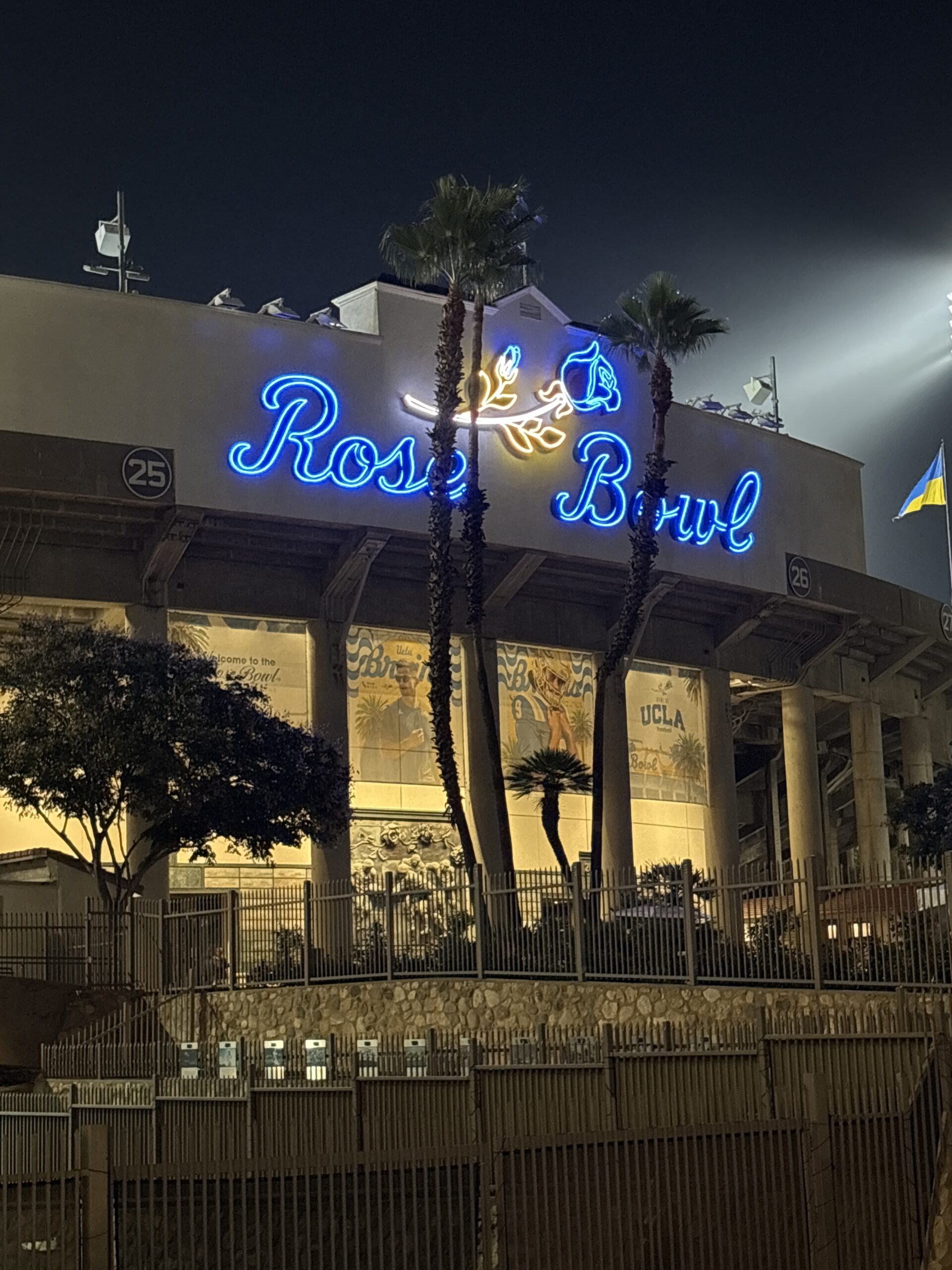
Then there is the Rose Bowl itself.
There are few venues in American sports with its history.
But history alone isn’t enough anymore.
The modern college football fan expects an experience, and UCLA and the Rose Bowl are clearly attempting to create one.
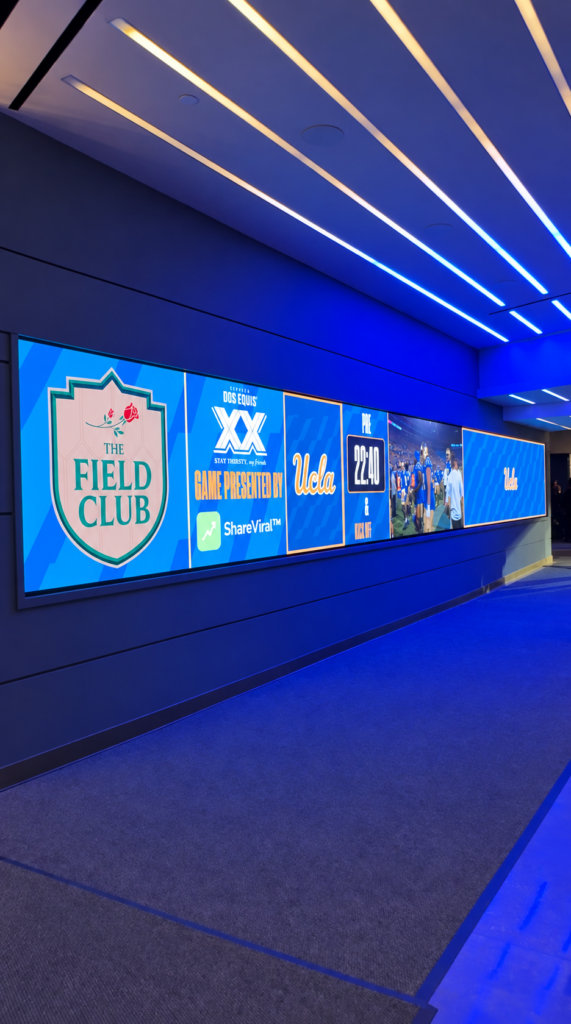
The centerpiece is the new Field Club, UCLA Football’s first field-level premium hospitality experience at the Rose Bowl.
And “club” almost undersells it.
Located in the south end zone, the climate-controlled space is limited to approximately 1,000 members, making it the most exclusive hospitality space UCLA has offered at the stadium. Members have premium seating, all-inclusive food and nonalcoholic beverages, a private bar, private restrooms and access to the space before, during and after the game.
But the defining feature is access.
UCLA’s new entrance onto the Rose Bowl field now runs directly through the Field Club.
Think about what that changes.
You aren’t watching UCLA Football from somewhere detached from the game.
You’re standing where the game comes alive.
Players emerge only feet away. The energy of the locker room spills directly into the space. The team passes through before entering one of the most historic fields in college football.
The Field Club opens well ahead of kickoff, allowing members to settle into an experience that begins long before the football does. Inside, even the merchandise experience reinforces the exclusivity, with select Field Club merchandise available only within the club.
It feels intentional.
Premium.
Los Angeles.
And, perhaps most importantly, new.
This isn’t an attempt to erase what the Rose Bowl has been.
It is an attempt to show what the Rose Bowl can become.
WINNING CHANGES THE SOUND OF A LOCKER ROOM
Of course, no amount of premium seating can manufacture what happens after a win.
That’s where the real change becomes visible.
There is a particular sound to a winning locker room.
Music shaking the walls.
Players shouting lyrics.
Teammates finding each other across the room.
Coaches smiling instead of immediately searching for an exit.
Phones in the air.
Laughter.
Relief.
Belief.
UCLA has created that scene three consecutive weeks.
It started in Berkeley.
Opening a new era on the road against an ACC opponent could have been a difficult introduction for a new staff, a new system and a team still establishing its identity.
Instead, UCLA walked into Berkeley and won 45–24.
And what happened afterward may have said as much about this team as what happened during the game.
As members of the media waited in the designated area for postgame interviews, the UCLA locker room was impossible to ignore.
The doors could contain the players.
They couldn’t contain the sound.
“Come to your trap, take over your trap.”
The lyric from Bankroll Fresh’s “Take Over Your Trap” blasted from inside the visiting locker room as UCLA celebrated its first victory of the Bob Chesney era.
There was something almost symbolic about hearing those particular words in that particular moment.
UCLA had traveled north, walked into another team’s stadium, won the football game and then filled the visiting locker room with enough music and celebration that the media waiting outside could feel what was happening on the other side of the walls.
It wasn’t the Rose Bowl.
It wasn’t Westwood.
It wasn’t home.
But for those few minutes, UCLA had made Berkeley feel like it belonged to the Bruins.
Come to your trap. Take over your trap.
For a team beginning a season built around a new identity, it was difficult to imagine a more fitting soundtrack.
That first road win set the tone.
It happened again after San Diego State.
And Saturday night, after beating Purdue, it happened again.
The Bruins haven’t just been winning at home. They have demonstrated an ability to walk into another team’s stadium, take the game, and then take over the visiting locker room afterward.
That matters because culture isn’t something you announce at a press conference.
It’s something you recognize when you walk into a room.
Or, sometimes, something you can hear before you ever enter it.
And right now, UCLA’s locker room feels connected.
THE NUMBERS ARE STARTING TO MATCH THE FEELING
There is substance underneath the celebration.
Against Purdue, UCLA produced 645 yards of total offense, a Big Ten-era high for the Bruins, while scoring 52 points. UCLA is 3–0 overall and 1–0 in Big Ten play and has outscored opponents 56–17 in the fourth quarter through its first three games.
Running back Wayne Knight has become one of the early faces of the new era, rushing for 177 yards and two touchdowns against Purdue and reaching eight rushing touchdowns through three games. Quarterback Nico Iamaleava delivered his best passing performance as a Bruin Saturday, throwing for 276 yards and three touchdowns.
There are still corrections to make.
Purdue accumulated 488 yards Saturday, and Chesney acknowledged afterward that his defense wasn’t as technically clean as it needed to be. UCLA has not yet played the complete complementary football game its coach is searching for.
That’s precisely why this story is interesting.
UCLA isn’t 3–0 because it has been perfect.
It is 3–0 while still discovering how good it can become.
CAN UCLA BECOME L.A.’S FOOTBALL TEAM?
And that brings us to the question UCLA ultimately has to answer.
Can UCLA Football become Los Angeles’ team?
Not USC’s rival.
Not simply the other major college football program in the city.
Los Angeles’ team.
That’s a much bigger ambition.
This is one of the most competitive sports markets in America. The Rams have a Super Bowl championship in the modern L.A. era. The Dodgers are woven into the city’s identity. The Lakers are a global brand. USC Football carries generations of history.
Attention here isn’t inherited.
It has to be earned.
But UCLA has ingredients it hasn’t always successfully put together at the same time: one of the world’s most recognizable universities, the Rose Bowl, Big Ten football, Southern California recruiting territory, a new football infrastructure, an expanding premium game-day experience and, most importantly, a team giving people a reason to pay attention.
UCLA Athletics is also openly investing in the fan side of the equation. Its new “Fours Up, Fans First” initiative includes Rose Bowl game-day enhancements, expanded student experiences, upgraded food and beverage offerings, BruinFest concerts, fan rewards and a revamped team entrance through the Field Club.
That’s how a football program becomes bigger than what happens between the sidelines.
You create something people want to belong to.
BUYING IN
Three games aren’t enough to proclaim UCLA’s destination.
They are enough to recognize its direction.
And the direction is worth watching.
There is new leadership.
There is a new general manager and football front office.
There is a new coaching staff.
There is a new premium experience inside the Rose Bowl.
There is a new energy on the sideline.
And, most importantly, there is winning.
Saturday night, under the lights in Pasadena, UCLA didn’t look like a program waiting for somebody to tell it what it could become.
It looked like a program beginning to believe it already knows.
You could hear it from the stands.
You could feel it standing on the sideline.
And after the final whistle, you could hear it again through the walls of the locker room.
The music was playing.
The Bruins were celebrating.
UCLA was 3–0.
And for the first time in a while, one of the most interesting questions in Los Angeles football doesn’t require looking across town.
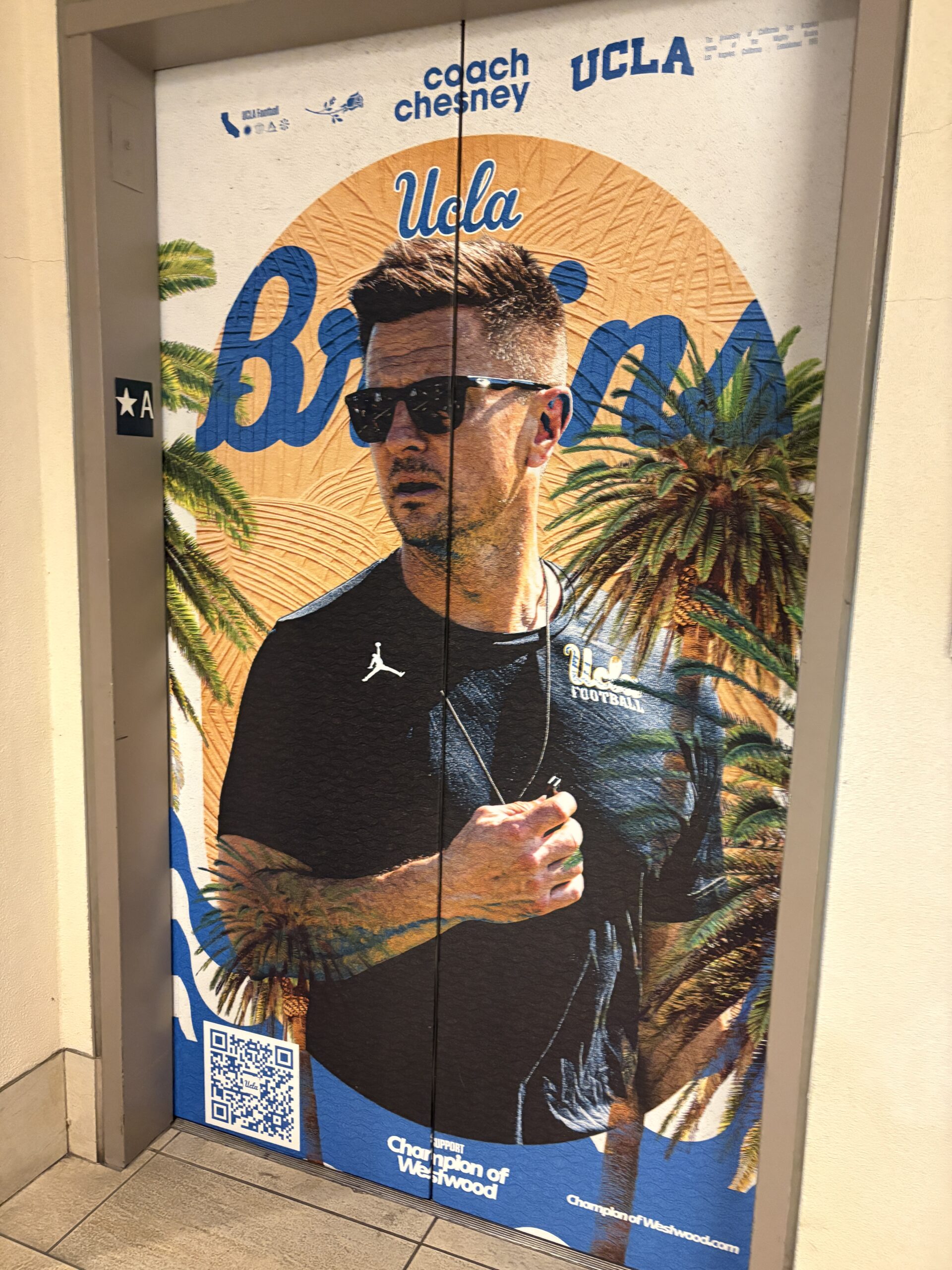
Is UCLA becoming L.A.’s new team?
The season will answer that.
But three weeks into the Bob Chesney era, one thing is already becoming clear: He came to WIN.